

Running Diesel Trucks Through South Texas Heat
South Texas puts diesel engines to work in tough conditions, from Gulf Coast humidity to long highway stretches across the Coastal Bend. Every truck built since the 2007 model year carries a piece of hardware built for exactly this kind of driving: the diesel particulate filter, or DPF. Drivers calling us for Corpus Christi truck towing often learn about this part for the first time when it starts causing trouble.
Heat and mileage actually help a DPF do its job, but the wrong mix of short trips and stop-and-go traffic works against it. Knowing how the filter operates, and what it needs from your driving pattern, keeps a routine part of engine maintenance from turning into a call for a tow.
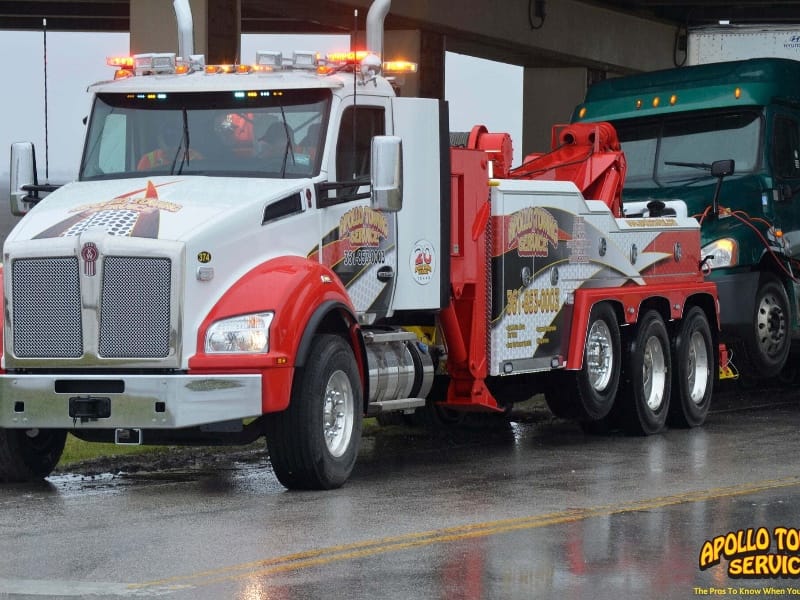
The Part of Your Exhaust System You Cannot See
The DPF sits in the exhaust path behind the engine, built from a ceramic honeycomb structure packed with narrow channels. As exhaust gas passes through, soot and ash collect on the channel walls instead of leaving the tailpipe. Federal rules required trucks to start capturing that soot beginning with the 2007 model year.
The filter cannot hold soot forever. Once enough builds up, exhaust flow gets restricted and engine performance drops. To prevent that, the truck’s computer manages a process called regeneration, which burns off trapped soot at high temperatures and resets the filter before it becomes a problem.
How the Filter Cleans Itself
Regeneration is not a single event. It happens in a few different ways depending on how a truck is being driven, which matters a lot for anyone running Corpus Christi truck towing routes through the summer heat.
Here is how each stage works:
Passive Regeneration
This is the version drivers never notice. Sustained highway speed produces enough exhaust heat to burn off soot automatically, without driver input. It is the most common form of regeneration on long hauls.
Active Regeneration
When passive regeneration has not kept up, the engine computer injects extra fuel to raise exhaust temperatures on its own. This can happen while the truck is still moving, often with just a slight change in engine sound. It usually finishes within twenty to forty minutes.
Parked Regeneration
If soot buildup gets too high for active regeneration to manage, the system requires the truck to sit stationary while it burns off the excess. This stage typically starts manually and can take up to an hour. It signals conditions the first two stages could not fully handle.
Signs Your DPF Needs Attention
Passive regeneration handles most soot, but short trips, heavy idling, and stop-and-go traffic do not generate enough heat for it. When that happens, the filter keeps filling, and it usually gets noticed on a Corpus Christi truck towing call before it shows up on a maintenance schedule.
Watch for these changes:
- A dashboard warning light for the DPF or emissions system
- Reduced power or a forced “derate” limiting speed and RPM
- Noticeably higher fuel consumption
- Regeneration cycles that happen more often or run longer than usual
None of these signs mean the truck is finished, but ignoring them rarely ends well. Catching a DPF problem early costs less than the alternative, and it is one of the more common reasons our team gets flagged down for truck towing in Corpus Christi.
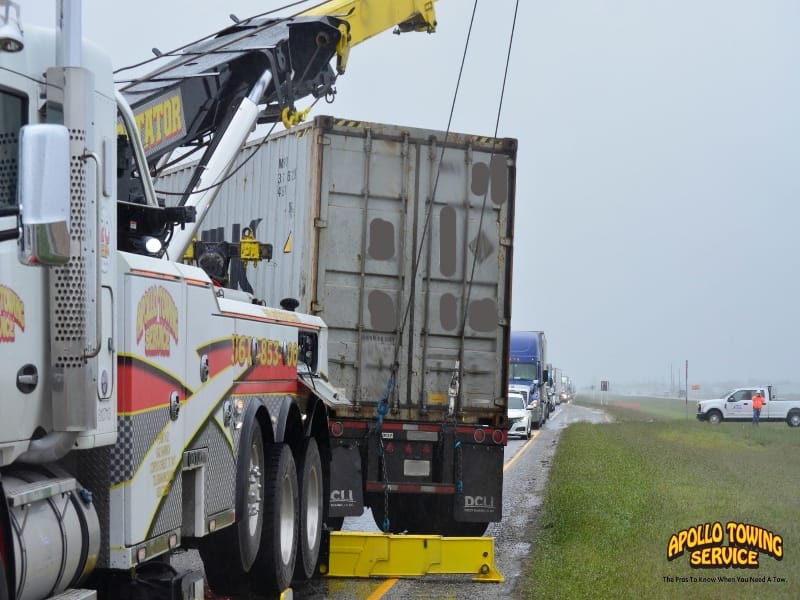
Apollo Towing: South Texas Truck Towing Built for the Long Haul
Apollo Towing & Semi Truck Heavy Wreckers has handled Corpus Christi truck towing and heavy recovery since 2011, running the largest and newest truck fleet in South Texas for local calls, long-distance transport, and off-road 4×4 pull-outs. Response runs 24/7, so a DPF warning light that turns into a real breakdown gets the same fast answer as a highway rollover. Large or small, we handle the haul, including the moment your rig needs truck towing in Corpus Christi instead of a shop visit.
We also stay involved off the clock through our “No Excuses” program, which provides a free tow and ride home during the holidays and Spring Break for anyone who should not be driving, and our “Shattered Dreams” program, which partners with area high schools to teach students about safe driving. That same presence in the community is why South Texas drivers keep calling us first for Corpus Christi truck towing.
FAQs
Can I keep driving if my DPF light comes on?
That depends on the warning level and the truck manufacturer’s instructions. An early warning may indicate that regeneration is needed, while a more serious warning can come with reduced engine power.
What is the difference between active and passive DPF regeneration?
Passive regeneration happens naturally when exhaust temperatures stay high enough during driving. Active regeneration raises exhaust temperature through the engine management system when extra heat is needed to burn accumulated soot.
How long does a parked regeneration usually take?
The time varies by truck, engine, and soot level. Drivers should follow the manufacturer’s procedure and allow the regeneration cycle to finish rather than interrupting it.
Why does my truck keep asking for regeneration?
Frequent regeneration can be linked to driving conditions, excessive idling, or an emissions system problem. If the pattern changes noticeably, the truck may need inspection.
Can a DPF be cleaned instead of replaced?
In many cases, yes. Professional cleaning can remove accumulated ash that regeneration cannot burn away, although a damaged or severely restricted filter may require replacement.
What happens if I ignore repeated DPF warnings?
The truck may eventually enter a derate that limits power, speed, or RPM. Continued problems can leave the vehicle unable to complete its route and in need of repair.